


What Is World Suicide Prevention Day?
World Suicide Prevention Day takes place every year on 10 September. It was established in 2003 by the International Association for Suicide Prevention (IASP), with the World Health Organization as a co-sponsor, to increase awareness of suicide prevention and encourage individuals, communities and organisations to take action.
The subject can be difficult to talk about. For some people, even seeing the word suicide can bring discomfort, fear or painful memories. Yet silence can make it harder for someone who is struggling to tell another person what they are experiencing.
World Suicide Prevention Day creates an opportunity to approach the subject differently. Rather than focusing only on statistics or crisis, it encourages conversations about connection, support, stigma and the circumstances that can leave someone feeling unable to cope.
The World Health Organization estimates that more than 720,000 people die by suicide globally each year. Behind every statistic are individuals, families, friends, colleagues and communities whose lives are affected.
For New Horizons Network, the message is particularly important: difficult feelings deserve to be heard, and people should have opportunities to seek appropriate support before reaching a point of crisis.
If low mood has become persistent or is making everyday life increasingly difficult, our depression counselling service provides a confidential space to explore what is happening and consider what support may be helpful.
If You Need Urgent Help Now
New Horizons Network provides counselling and therapeutic support but is not an emergency or crisis service.
If you or somebody else is in immediate danger, call 999 or go to A&E. If you need urgent mental health support but it is not an immediate emergency, call NHS 111 and select the mental health option. The NHS advises that urgent mental health support is available through 111 across England.
If you are in Dorset, Connection provides free mental health advice and support 24 hours a day on 0800 652 0190. You can call for yourself or because you are concerned about a friend or family member.
You can also call Samaritans free on 116 123, day or night, 365 days a year.
World Suicide Prevention Day 2026: Changing the Narrative on Suicide
The theme for World Suicide Prevention Day from 2024 to 2026 is Changing the Narrative on Suicide, with the call to action Start the Conversation. 2026 is the third and final year of this international theme.
Changing the narrative means moving away from secrecy, stigma, judgement and oversimplified explanations.
Suicide is complex. There is rarely one event or one reason behind suicidal thoughts or a death by suicide. Mental health difficulties, trauma, bereavement, relationships, physical health, isolation, financial circumstances and other pressures can interact in different ways for different people. This is why assumptions about why somebody is struggling can be unhelpful.
A more compassionate approach is to create environments where people can say, “I am not coping”, without fearing how others will respond.
The idea behind Start the Conversation is not that everyone needs to become a mental health professional. It is that ordinary human connection matters. Friends, partners, colleagues, relatives and neighbours can notice changes, ask questions and listen.
Professional help remains important, but sometimes the first step towards that help is simply being able to tell another person what is happening.
Why Talking About Suicide Matters
Many people worry that mentioning suicide might make matters worse.
They may fear saying the wrong thing, upsetting somebody or somehow introducing an idea that was not there before.
This can lead to people avoiding the subject entirely, even when they are seriously concerned.
Guidance from IASP specifically challenges this fear. Asking someone directly if they are experiencing suicidal thoughts does not increase those thoughts. A compassionate question can instead give someone permission to speak honestly about something they may have been carrying alone.
Talking does not mean you need to have the perfect response. Often, listening carefully and taking what somebody says seriously is more useful than immediately searching for a solution.
The NHS similarly advises people who are worried about someone to encourage them to talk, ask open questions and listen rather than feeling they need to have all the answers.
Understanding Suicidal Thoughts Without Making Assumptions
Suicidal thoughts can vary considerably.
For some people they may be fleeting. For others they may be recurring, frightening or increasingly difficult to manage. Somebody may feel able to talk openly about them, while another person may hide what they are experiencing.
It is also important not to assume that suicidal thoughts automatically mean somebody has depression.
Depression can be associated with suicidal thinking, but suicide is a complex issue and people may experience suicidal thoughts in many different circumstances. Equally, most people experiencing depression are not suicidal.
This distinction matters because we should respond to the person in front of us rather than trying to fit their experience into a diagnosis.
Where depression is present, therapy for depression can help someone explore low mood, hopelessness, difficult experiences and patterns that may be affecting their ability to cope.
Counselling is not a substitute for urgent crisis intervention when somebody is at immediate risk. It may, however, form part of longer term support once immediate safety has been addressed.
Recognising When Someone May Be Struggling
There is no reliable checklist that can tell us whether someone is suicidal. Some people show noticeable changes, while others may appear outwardly well.
For that reason, changes should be treated as reasons to check in rather than proof of what someone is experiencing.
Changes in Mood or Outlook
Someone who is struggling might become noticeably more withdrawn, distressed, irritable or emotionally flat. They may talk about feeling hopeless, trapped or unable to imagine circumstances improving.
These experiences do not necessarily mean someone is suicidal, but they are worth taking seriously.
Pulling Away From Other People
A person may gradually stop responding to messages, cancel plans or withdraw from activities and relationships that previously mattered to them.
Isolation can make distress harder to share. A simple message that does not demand an explanation can sometimes make contact feel more manageable.
Significant Changes in Daily Life
Changes in sleep, appetite, work, relationships or usual routines can sometimes accompany emotional distress.
Again, the aim is not to diagnose somebody based on their behaviour. It is to notice when something feels different and create an opportunity to talk.
Talking About Not Being Able to Cope
Sometimes people speak directly about suicide. At other times their language may be less explicit.
Any suggestion that someone feels unable to continue, believes others would be better without them, or does not feel safe should be taken seriously.
You do not need to determine how serious their thoughts are yourself. You can ask what they mean, listen and help them reach appropriate professional support.
How to Start a Conversation About Suicide
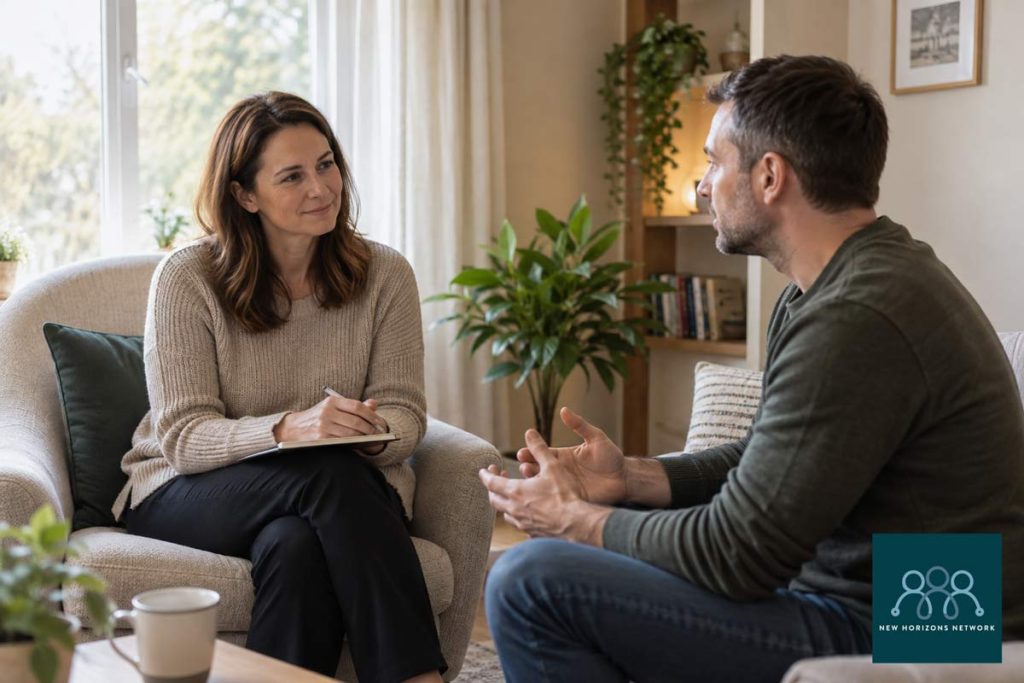
Starting a conversation can feel uncomfortable, particularly if you are afraid of getting it wrong.
The goal is not to conduct an assessment. It is to communicate that you have noticed something, you care, and you are willing to listen.
Choose a Calm Moment
Where possible, find somewhere private where you are unlikely to be interrupted.
You might begin by mentioning what you have noticed, rather than making assumptions about why it is happening.
For example, you may have noticed that somebody has become quieter, stopped attending social events or seems overwhelmed.
Ask Clearly and Compassionately
If you are genuinely worried that someone may be suicidal, it is appropriate to ask directly.
Avoid vague language that makes it easy for the subject to remain hidden. A clear question asked calmly can communicate that suicide is something you are prepared to hear about without judgement.
IASP specifically encourages people not to be afraid of asking someone if they are suicidal, noting that empathy, validation and an offer of support are more likely to reduce distress than make it worse.
Listen Before Trying to Solve
When someone tells you something frightening or painful, the natural impulse is often to reassure them immediately.
Statements intended to help, such as telling somebody how much they have to be grateful for, can unintentionally make them feel that they have failed to appreciate their life.
Instead, allow them to describe what they are experiencing.
You can acknowledge that things sound extremely difficult without agreeing with hopeless conclusions about their future.
Take Them Seriously
Do not dismiss suicidal thoughts as attention seeking, dramatic or something the person should simply overcome.
Suicidal distress deserves a serious and compassionate response.
If somebody tells you they do not feel safe, help them access appropriate urgent support.
What Should You Do If Someone Says They Are Suicidal?
Hearing somebody say they are thinking about suicide can be frightening. You may feel responsible for finding the right words or making everything better.
You do not have to manage the situation alone.
If you believe someone is in immediate danger, call 999 or take them to A&E. If urgent mental health help is needed but there is no immediate emergency, contact NHS 111 and select the mental health option. In Dorset, you can also contact Connection on 0800 652 0190, which operates around the clock and can advise people who are worried about someone else as well as those experiencing a crisis themselves.
Where it is safe and possible to do so, remain connected with the person while appropriate support is arranged.
You can also encourage them to call Samaritans on 116 123 if they need someone to listen.
What matters is that disclosure leads towards support rather than secrecy.
What Not to Say When Someone Is Struggling
It can be tempting to respond with positivity because we desperately want somebody we care about to feel differently.
But phrases such as “things could be worse”, “think about your family” or “you have so much to live for” may leave someone feeling guilty for experiencing the emotions they have.
Likewise, trying to debate someone out of their feelings can close down the conversation.
You do not have to agree with a person’s belief that nothing can improve. You can simply recognise how unbearable things feel to them at that moment.
Listening with curiosity is usually more helpful than trying to produce an instant answer.
Suicide, Depression and Mental Health
Suicidal thinking should never be reduced to a single mental health condition.
However, persistent depression can leave some people experiencing profound hopelessness, exhaustion, isolation or loss of interest in life.
If someone has been struggling with low mood for weeks or months, professional support can help them understand what is happening. Our depression counselling page explains more about counselling for depression and the type of support available through New Horizons Network.
For some people, their difficulties are connected with trauma or experiences that continue to affect how safe they feel in the present. In these circumstances, appropriate trauma therapy and PTSD support may form part of longer term therapeutic work.
The important point is that support should be appropriate to the individual. There is no single therapy or intervention that is right for everyone.
Self-Harm and Suicide Are Not the Same Thing
Self-harm and suicide are sometimes spoken about as though they are interchangeable. They are not.
A person may self-harm without wanting to die. Samaritans notes that self-harm can serve different functions for different people, including attempting to manage or express intense emotional distress. At the same time, self-harm is associated with increased suicide risk and should always be taken seriously.
It is therefore important not to assume either that a person who self-harms wants to die or that there is no risk because they say their self-harm is not suicidal.
Intent and circumstances can change.
If self-harm is something you or someone close to you is experiencing, our website allows you to find therapists who work with self-harm. Where there is immediate danger or an urgent mental health crisis, crisis services should be contacted rather than waiting for a counselling appointment.
Supporting Someone Without Becoming Their Therapist

Caring about someone who is struggling can create a powerful sense of responsibility.
You may start checking your phone constantly, worrying whenever they do not reply or feeling that you need to remain available at all hours.
Being supportive does not mean becoming solely responsible for another person’s safety or mental health.
A healthier approach involves helping somebody build a wider support network. That might include their GP, NHS mental health services, trusted friends or relatives, crisis support where appropriate and longer term therapy.
You also need support yourself.
If you are close to somebody experiencing repeated crises, fear, uncertainty and exhaustion can affect your own wellbeing. Speaking confidentially with a therapist through individual therapy can provide somewhere to process those feelings without making the person in crisis responsible for reassuring you.
Suicide Bereavement and the Impact on Those Left Behind

World Suicide Prevention Day also matters deeply to people who have lost somebody to suicide.
Bereavement after suicide can involve grief alongside shock, unanswered questions, anger, guilt or a persistent need to understand why the death happened.
People may replay conversations or events and wonder whether they should have noticed something or acted differently.
It is important to remember that suicide is complex. A death should not be attributed to one conversation, relationship, disagreement or individual event. Samaritans’ guidance emphasises that suicide usually involves multiple interacting factors rather than one simple explanation.
Grief also has no standard timetable.
Some people want to talk about the person who died. Others need privacy. Anniversaries, birthdays and events such as World Suicide Prevention Day can bring emotions closer to the surface again, even many years later.
Our bereavement counselling service offers space to explore grief without expectations about how you should be coping. You may also find our article Understanding Grief: Why There Is No Right Way to Grieve helpful.
How Counselling Can Help After a Period of Crisis
Urgent mental health services and counselling fulfil different roles.
When someone is in immediate danger, crisis and emergency services are the appropriate source of help.
Once immediate risk has been addressed, therapy can provide a longer term space to understand what has contributed to emotional distress.
A therapist may help someone explore relationships, loss, trauma, identity, low self-esteem, anxiety, depression or patterns that have become difficult to manage.
Therapy can also help a person develop a better understanding of their emotional responses and identify what helps them recognise when their wellbeing is deteriorating.
This work takes time. There is no responsible promise that counselling will remove difficult thoughts or prevent every future crisis.
Its value lies in providing a consistent therapeutic relationship in which difficult experiences can be explored safely and honestly.
New Horizons Network has therapists with a range of approaches and specialisms. You can browse our therapists to explore who may suit your needs and the type of support you are seeking.
Suicide Prevention and Mental Health in the UK
The need for careful suicide prevention work remains significant.
The latest provisional Office for National Statistics figures available at the time of writing show that 5,728 suicides were registered in England during 2025, corresponding to a provisional rate of 11.1 deaths per 100,000 people. ONS also stresses an important limitation: suicide statistics are based on the year a death is registered, and registration can take place well after the death itself because a coroner’s inquest must first be completed.
Statistics tell us about the scale of the issue, but they do not tell us who may be struggling today.
That is why suicide prevention also happens at a human level: reducing stigma, making mental health support easier to access and creating spaces where difficult conversations are possible.
Finding Mental Health Support in Dorset
For people across Christchurch, Highcliffe, Bournemouth, Poole, Mudeford, Southbourne, Tuckton and the surrounding areas, support can take different forms depending on what is happening.
If you are in crisis, Dorset HealthCare’s Connection service on 0800 652 0190 provides free support 24 hours a day. It is available to Dorset residents and visitors, and you do not need to already be known to mental health services.
If the situation is not an emergency and you are looking for ongoing therapeutic support, New Horizons Network provides access to counsellors working across a range of difficulties. You can explore counselling in Highcliffe or find a counsellor in Christchurch, alongside therapists working in other locations and online.
You can also contact New Horizons Network if you are unsure what type of counselling might be appropriate.
Again, if you are currently at immediate risk, please use crisis or emergency services rather than waiting for a response to a counselling enquiry.
World Suicide Prevention Day Is About More Than One Day
World Suicide Prevention Day provides a valuable moment for attention, but conversations about suicide cannot be limited to 10 September.
Changing the narrative means being able to talk about emotional distress throughout the year.
It means taking somebody seriously when they say they are struggling.
It means recognising that suicide is complex rather than looking for one person, event or diagnosis to blame.
It means understanding the difference between being supportive and trying to carry responsibility for another person’s mental health alone.
And it means ensuring people know where they can turn when their usual ways of coping no longer feel enough.
The 2026 message, Changing the Narrative on Suicide: Start the Conversation, is deliberately simple. We may not always know exactly what to say, but compassionate conversation can create space for honesty, connection and appropriate support.
If you are seeking ongoing counselling following depression, trauma, bereavement or another period of emotional difficulty, you can contact New Horizons Network to discuss the support available.
FAQs About World Suicide Prevention Day and Suicide Support
World Suicide Prevention Day takes place every year on 10 September. It is an international awareness day focused on suicide prevention, reducing stigma and encouraging informed, compassionate conversations.
The 2026 theme is Changing the Narrative on Suicide, with the call to action Start the Conversation. It is the final year of the theme that has run from 2024 to 2026.
Guidance from the International Association for Suicide Prevention says that talking about suicidal thoughts does not increase their presence or occurrence. Asking directly and compassionately can give somebody an opportunity to speak openly and access support.
Take them seriously and listen without judgement. If they are in immediate danger, call 999 or go to A&E. For urgent mental health help that is not an emergency, call NHS 111 and select the mental health option. Dorset residents can also contact Connection 24 hours a day on 0800 652 0190.
No. Some people self-harm without intending to end their life. However, self-harm is a sign of serious emotional distress and is associated with increased suicide risk, so it should always be taken seriously.
No. Suicide is complex and should not be attributed to one condition or event. Depression can be one contributing factor for some people, but many different personal, social, psychological and environmental factors can interact.
Counselling can form part of longer term support once immediate safety needs have been addressed. It can provide space to explore emotional distress, depression, trauma, relationships, grief and other experiences that may be affecting wellbeing. Counselling is not an emergency crisis service.
Bereavement support can provide a confidential place to process grief, shock, anger, guilt and other complex emotions following a suicide. New Horizons Network offers bereavement counselling for people who would like therapeutic support.
Dorset HealthCare’s Connection helpline is available 24 hours a day on 0800 652 0190. Samaritans can be reached free on 116 123 at any time. If you or another person is in immediate danger, call 999 or go to A&E.


Leave a Reply